The 5th Nuclear Photonics Conference
6. – 10. Oktober 2025
TU Darmstadt
Indico Website
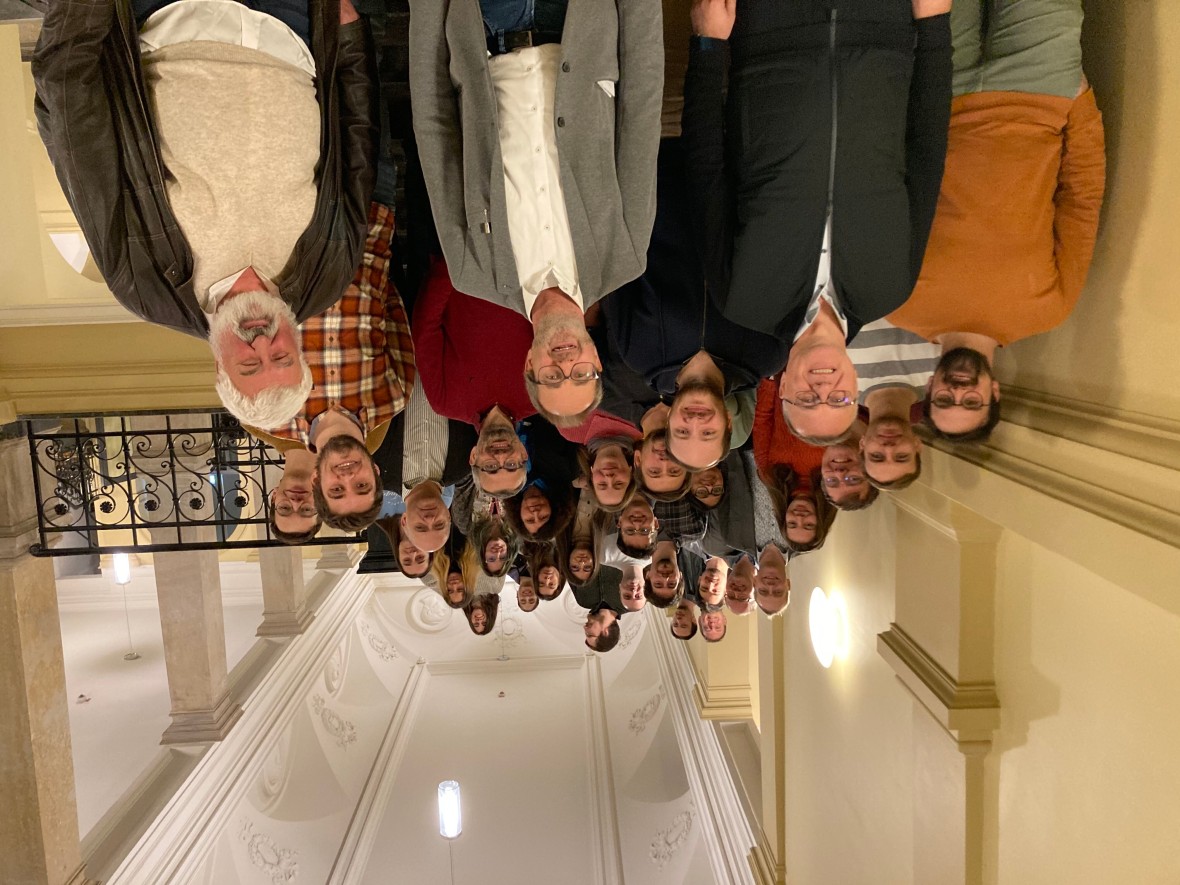
Konferenzfoto in hoher Auflösung
The 5th International Conference on Nuclear Photonics was held October 6–10, 2025 at TU Darmstadt. The event brought together more than 120 researchers from all over the World to present advances in photon-induced phenomena on nuclear energy scales or related applications, and to exchange ideas on future developments of the field.
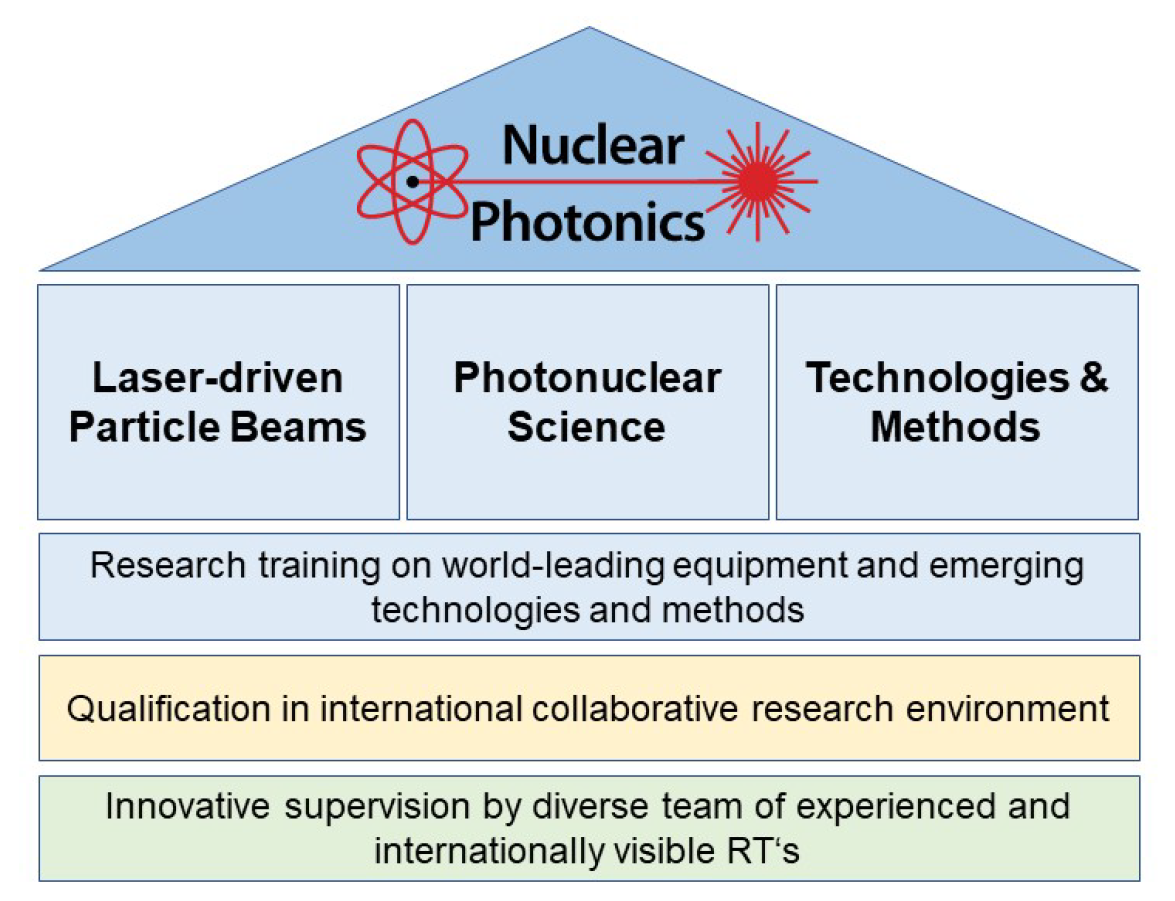
Organized by the bilateral, German-Romanian, International Research Training Group on “Nuclear Photonics” located at TU Darmstadt and GSI and at the National University of Science and Technology POLITEHNICA Bucharest and the Extreme Light Infrastructure – Nuclear Physics (ELI-NP), the conference provided the stage for 94 scientific presentations. Four keynote lectures, by Prof. Zuegel (Rochester) on recent laser advancements, by Prof. Barty (Irvine) on advanced gamma-ray sources for medical and commercial applications, by Prof. Khan (Orsay) on the contemporary aspects of the nuclear Giant Dipole Resonance, and Prof. Roth (Darmstadt) on advances in laser-driven fusion technology emphasized the scientific breadth and technological importance of the field. 28 invited presentations, further 25 oral presentations, and 37 poster presentations highlighted the growing scope of Nuclear Photonics bridging between nuclear physics, Mößbauer-spectrometry, high-intensity laser research, and applied technologies in medicine or the commercial sector. The diverse and well-balanced scientific program addressed the extremes: reaching from the extreme precision potentially provided by nuclear clocks (Prof. Thirolf) and photonuclear reactions on ultra-high energy cosmic rays with extreme energies (Dr. Bekker) to extreme acceleration of particles in highest-intensity laser fields (e.g., Prof.s Pomerantz and Ursescu). Photonuclear reactions, ranging from Compton scattering off the nucleon (Prof.s Grießhammer and Leung) to the collective modes of heavy nuclei (e.g., Profs. Litvinova, Colo, Otsuka), or photofission of actinides (Dr. Friesen) were addressed as well as production of vortex gamma-beams (Prof. Baran), particle-accelerators for photonuclear reactions (Dr.s Arnold and Djapo), and other topics. A special session was dedicated to the memory of Professor Dr. Sydney Gales and his lasting contributions to the field of nuclear photonics.
The scientific sessions of the Nuclear Photonics 2025 fostered lively discussions and cross disciplinary exchange with participants sharing insights from both fundamental and applied research. Two options for excursions, one to the construction site of the Facility for Antiproton and Ion Research (FAIR) at the GSI campus or the other one to the European Space Operations Center (ESOC) of the European Space Agency (ESA) and to the UNESCO World Cultural Heritage of the Mathildenhöhe ensemble of Art Nouveau and a dinner at the former Hessian Grand Duke’s Orangery enriched the conference program.
A large number of early career researchers contributed actively to both oral and poster presentations. Outstanding Poster Prizes were awarded to Tim Egert (Mainz), Amrita Gupta (Darmstadt), and Cristian Alexe (Bucharest), in recognition of the quality, originality, and clarity of their research. They underscored the conference’s strong commitment to supporting and encouraging the next generation of scientists in the field.
In conclusion, Nuclear Photonics 2025 was a successful conference which showcased the scientific uniqueness, timeliness, and importance of research at the scientific borders between high-intensity laser physics, nuclear physics, and particle-accelerator sciences.